Elexon. Making complex energy data clear and actionable for everyday users.
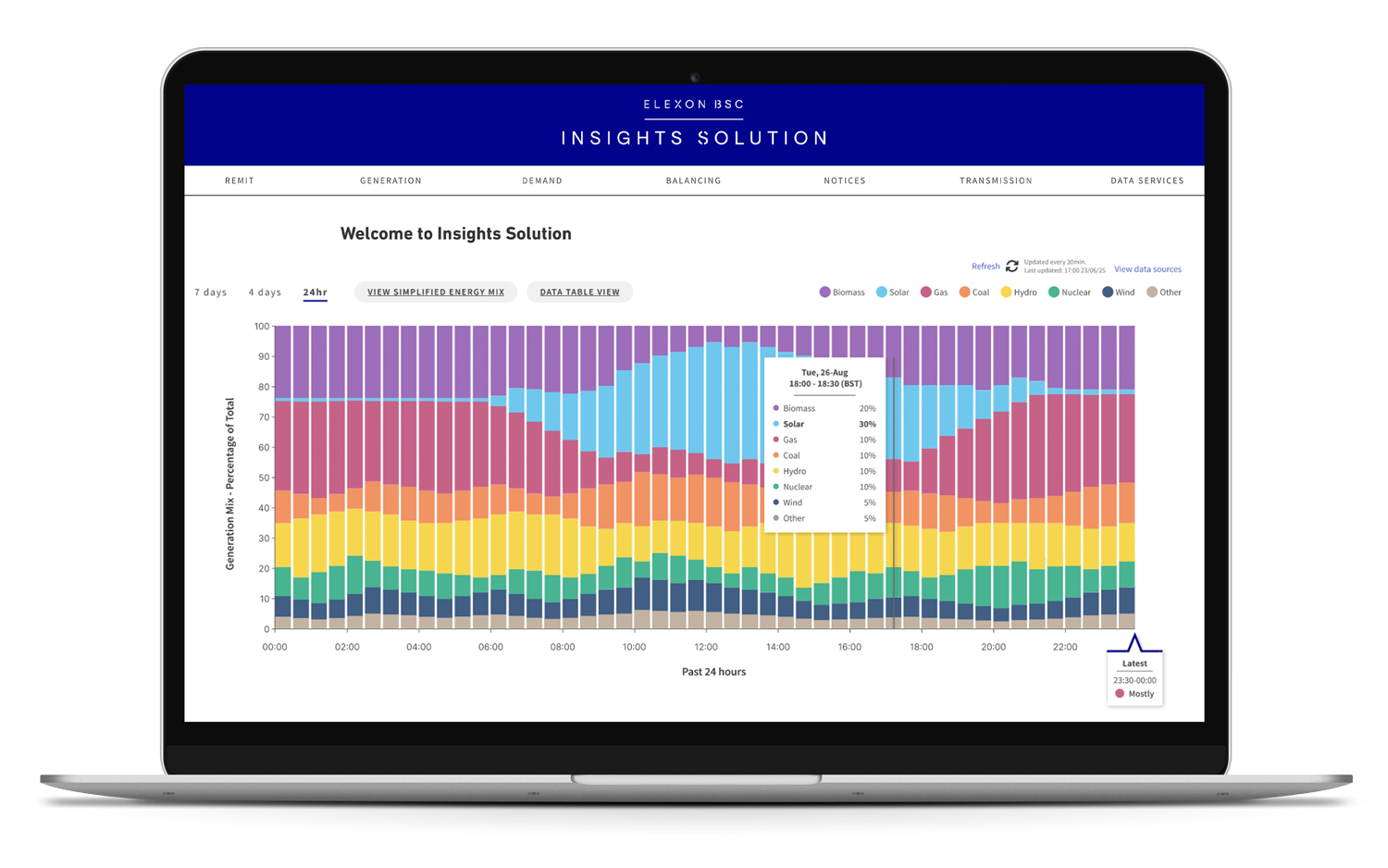
A proof of concept exploring how Elexon's industry-facing energy data could help people make more informed energy choices without compromising its accuracy or neutrality.
CLIENT:
Elexon (for Softwire)
TIME:
12 Weeks
MY ROLE:
UX Research · Problem Framing · Usability Testing · Product Strategy · Workshop Facilitation · Usability Testing · Accessibility · Cross-functional Collaboration
TEAM:
UX Designers x 2 · Design Principle · Developer Lead · Developers x 5
Quick Read
The Context
Elexon is a not-for-profit organisation at the heart of the UK’s energy system, working neutrally across the industry to support the transition to Net Zero. As part of this, helping the public understand their energy use and make informed choices will become increasingly important.
The Challenge
Elexon’s data was built for industry experts, with technical language, complicated graphs and a lot of complex detail. We were tasked with creating a proof-of-concept dashboard that transformed this complex data into something simple and accessible for non-technical users. But simplifying the data isn’t enough.
How might we help people to understand how changing when and how they use energy can make a difference, while keeping the information accurate and neutral?
The Outcomes
01.
Made energy data easier to understand
Demonstrated how Elexon’s complex energy-market data can be turned into clear, consumer-friendly information that users with little energy knowledge could understand and interpret.
02.
Moved from a dashboard to progressive disclosure
Early testing revealed cognitive overload, prompting a shift from a traditional dashboard model to a progressive disclosure design with practical tips and information about CO2.
02.
Made carbon intensity meaningful
Added context and clearer explanations around carbon intensity so users could recognise cleaner periods and understand what the data meant for their energy choices, while maintaining Elexon’s neutrality.
“We’ve been really pleased with the quality of the content, backed by solid research. We cannot wait to put these ideas into production”- Elexon Stakeholder
My Role
As one of two UX designers in a cross-functional team, I worked across the full arc of this project - from research and problem framing to content design and testing - building the stakeholder trust needed to move fast within an Agile process.
-
I worked as one of two designers in an Agile team alongside five developers. Regular check-ins and joint ideation sessions brought technical insight into the design process early, helping us identify risks and make faster, more confident design decisions.
-
My co-designer and I shared research responsibilities: we divided desk research aligning findings; I designed the user questionnaire and interview guide, led four of eight user interviews (taking notes on four) and led two stakeholder interviews.text goes here
-
I facilitated design workshops with the full team, guiding discussions, aligning decisions and making sure insights were captured and acted on.
-
When testing revealed confusion, I introduced a hands-on mapping technique to explore a progressive disclosure approach, helping us restructure the journey into a layered, guided user experience.
-
I advocated for accessibility throughout the design process, using a colour-blindness simulator to identify weaknesses in visual cues and pushing for a data table structured for screen-reader accessibility, strengthening the design beyond visual usability.
-
Throughout the project, I focused on connecting user insight, business goals and technical feasibility. My ability to zoom out and keep the bigger picture in view ensured the solution aligned with Elexon’s needs.
Designs at a Glance
-
![]()
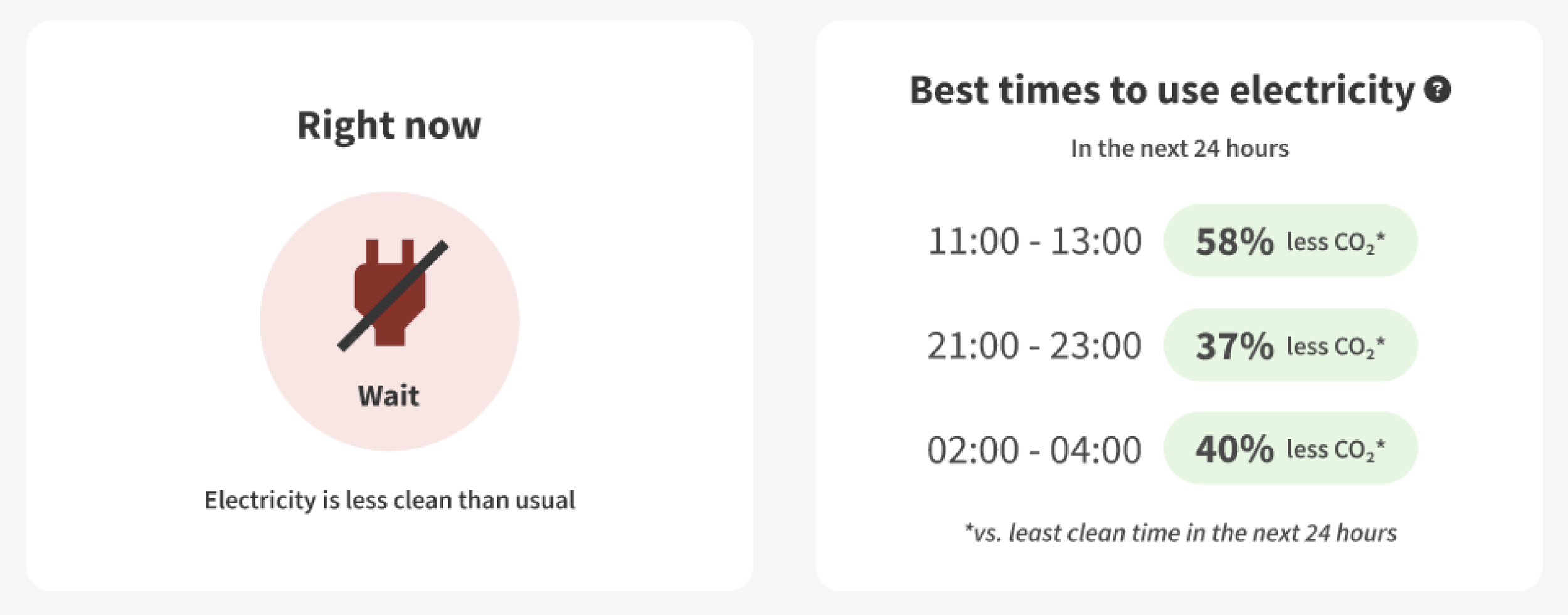
01. Take action now or wait
See at a glance when electricity is cleaner in the next 24 hours - without having to interpret complex data.
-
![]()
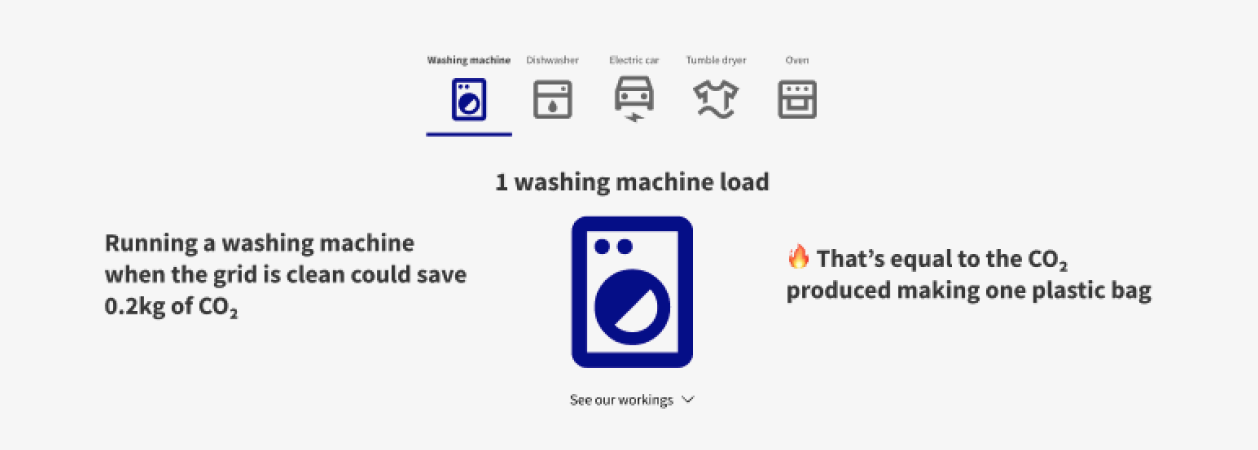
02. Understand the impact
Use relatable comparisons to understand the environmental impact of energy choices.
-
![]()
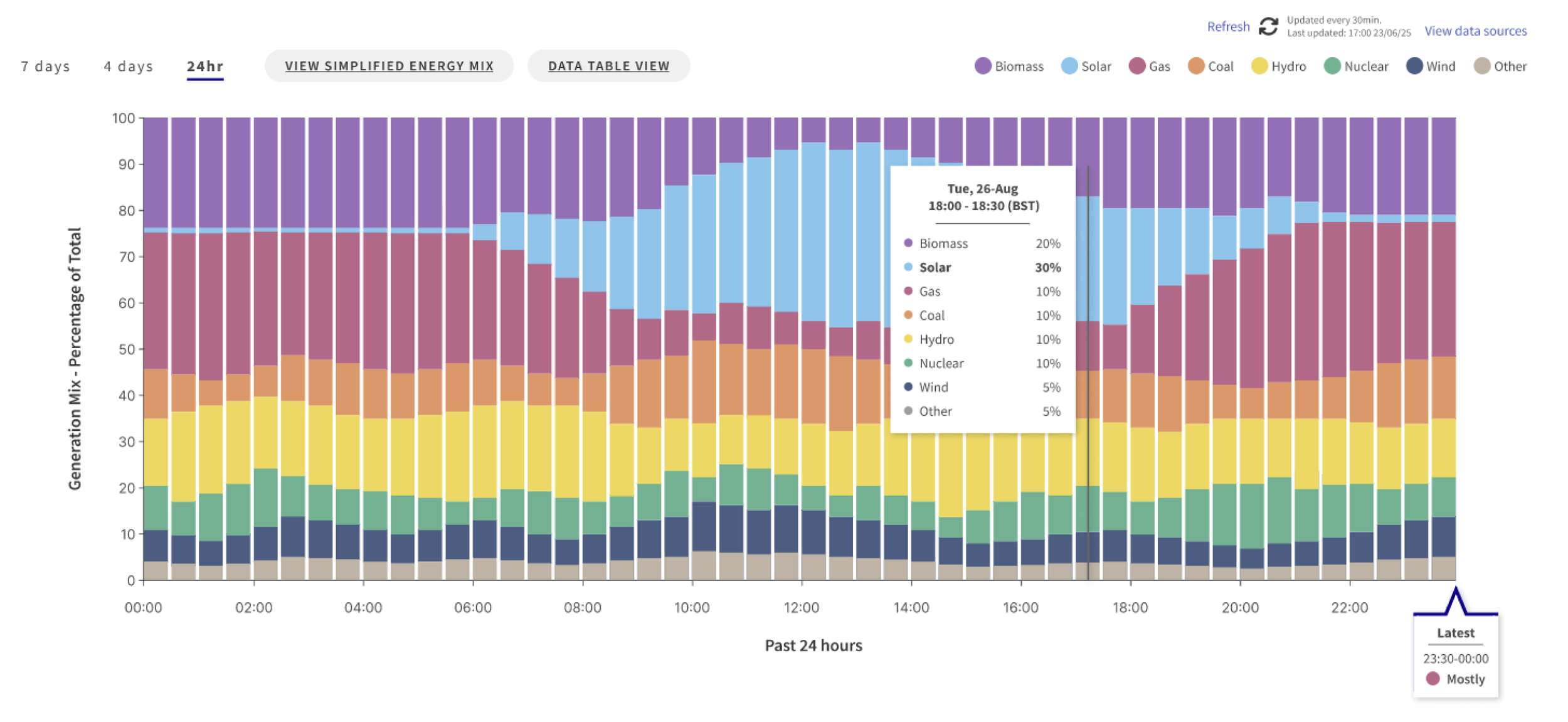
03. Explore the data
Use relatable comparisons to understand the environmental impact of energy choices.
The Process
Finding the Unknowns
Assumption mapping helped identify our highest-risk unknowns and shaped a focused research plan, guiding user research and stakeholder interviews.
Understanding Different Persectives
70
Survey
responses
8
User
interviews
3
Stakeholder
interviews
-
We wanted to understand people's energy habits, knowledge and attitudes - and what might help them change behaviour. Discussions with stakeholders ensured that we held their key priorities in sight throughout the project.
I designed and ran the screener survey to understand the level of knowledge of energy data and recruit a demographically varied participant group.
I designed the interview guide and led 4 of 8 interviews, exploring participants’ habits and attitudes toward energy data.
I led 2 of 3 meetings with product, strategy and marketing, refining scope and aligning priorities to balance user needs with business goals.
Understanding the Business Context
The assumption map also shaped our discussion guides for stakeholder meetings across product, strategy and marketing.
From these meetings, we distilled key priorities for Elexon:
01.
Highlight
Net Zero role
02.
Organisation visibility
03.
Internal sustainability goals
Understanding User Needs
These user needs became cornerstones that the co-designer and I referred back to throughout the project, ensuring that our decisions were evidence-led.
01.
Clarity at a glance
Information must be understandable without effort.
“I have all this data on Smart meter, but it’s so hard to sift through it”
02.
Personal relevance
Progress tracking and comparisons increased motivation.
“I'd want information to be tailored to me so I could change my behaviour compared to my usage”
03.
Actionability
Users wanted to be told what to do, not left to interpret graphs.
“I wish it just told me what to do, like a daily nudge I get from my fitness app”
04.
Convenience
Behaviour change had to fit seamlessly into existing routines.
“I don't take action because I am busy day to day, I value convenience”
Defining the Challenge
We synthesised the interviews using an affinity map, identifying recurring needs and barriers. These findings helped us frame the problem and define our design direction.
BARRIERS TO CHANGING ENERGY HABITS
How Might We…
…present relevant information to the everyday person that aligns with their motivations and reduces barriers to change, so that they feel able to adopt sustainable energy habits?
Simplify complexity
Make technical information understandable without distorting it.

Maintain neutrality
Encourage informed decisions without advocating for specific products, providers or behaviours.

Empower greener habits
Provide clear information that empowers greener decision-making.

“I try to reduce my energy usage when I have the headspace for it”57% of survey respondents
Two Motivations,
One Experience
Research showed that people were motivated by both financial and environmental benefits.
46%
Saving
money
48%
Helping the
environment
Rather than designing around a single motivation, we explored how the experience could communicate both financial and environmental value while remaining neutral.
Two distinct personas helped us keep real users in mind.
Kaylah, 32
Money-motivated
Motivation: Save money
Needs: Quick, practical decisions
Barrier: Technical data feels overwhelming
“I think you have to live your life, I cannot live according to a rigid schedule, or when I use the dishwasher”
Helen,60
Eco-conscious
Motivation: Reduce environmental impact
Needs: Understand the impact of her choices
Barrier: Technical language and vague advice
“I feel responsible for what world I’ll leave for my kids, but the government needs to do more."
From Research to Design Decisions
02.
Research Showed
Users didn’t know when greener times were.
Design Solution
Show the best times in plain language so users don’t have to interpret the data themselves.
01.
Research Showed
Users had different motivations.
Design Solution
Show both financial and environmental value.
03.
Research Showed
Mental load was a barrier to taking action.
Design Solution
Prioritise glanceable information over deep analysis.
Exploring the Opportunity
I led a rapid ideation session together with the 5 developers.
This was a chance to bring fresh perspectives to the table, validate ideas and surface technical constraints early.
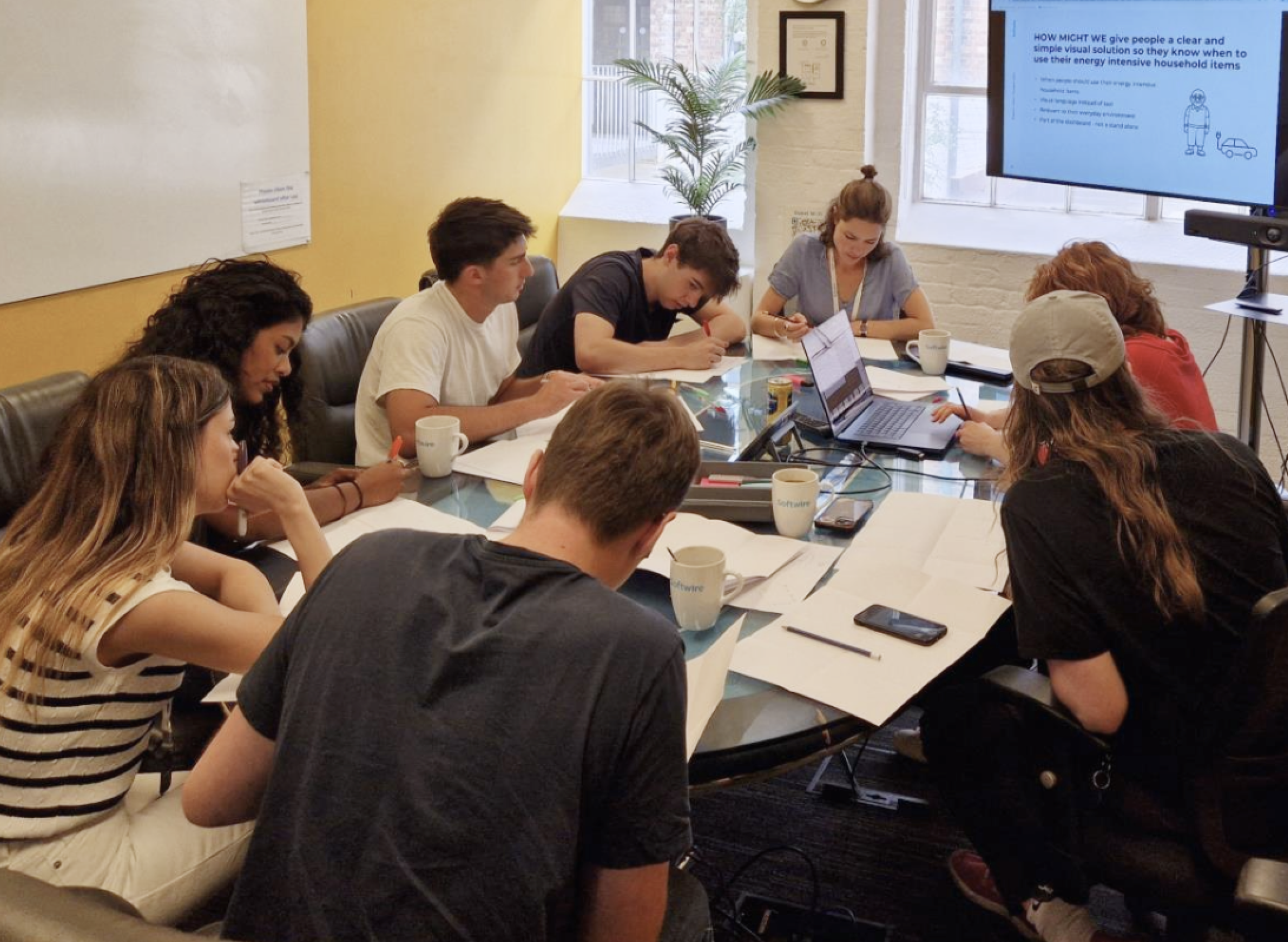
How Might We statements and a simplified proto-persona (“imagine your grandpa wants to charge his EV”) helped the team stay focused on real user needs rather than personal assumptions.
Ideas We Took Forward
01.
Make CO₂ relatable
Use real-world comparisons to help users understand environmental impact.
02.
Show greener windows
Clearly show cleaner periods so users don't have to interpret the data themselves.
03.
Show potential savings
Connect cleaner energy use with financial value for money-motivated users.
Early Testing Changed the Direction
I proposed testing the low-fidelity concept informally with colleagues before investing further time in the direction.
This revealed that a dashboard format created confusion - testers didn’t know where to start.
We needed to rethink our approach:
From Dashboard to Guided Experience
We made a decision to move away from a traditional dashboard and offer a more guided experience through the page that added layers of context and information.
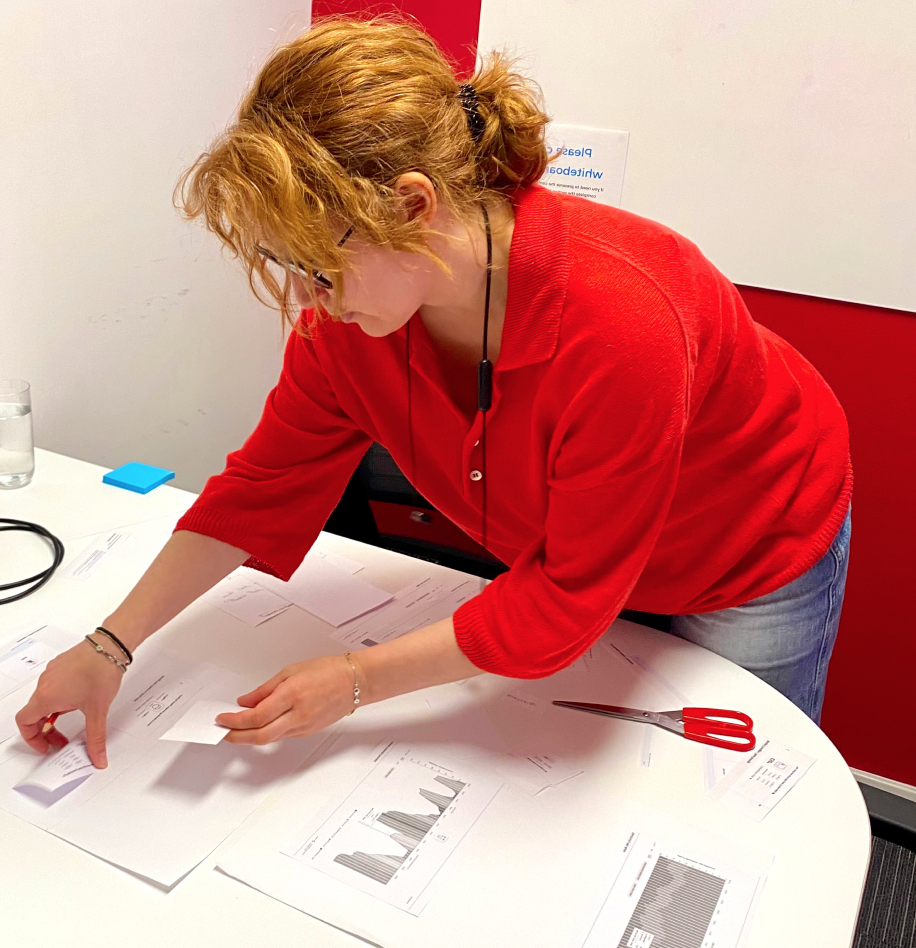
I proposed printing and physically rearranging UI components to explore the new structure. This helped us visualise the user journey and quickly test different information hierarchies.
Accessibility Shaped the Design
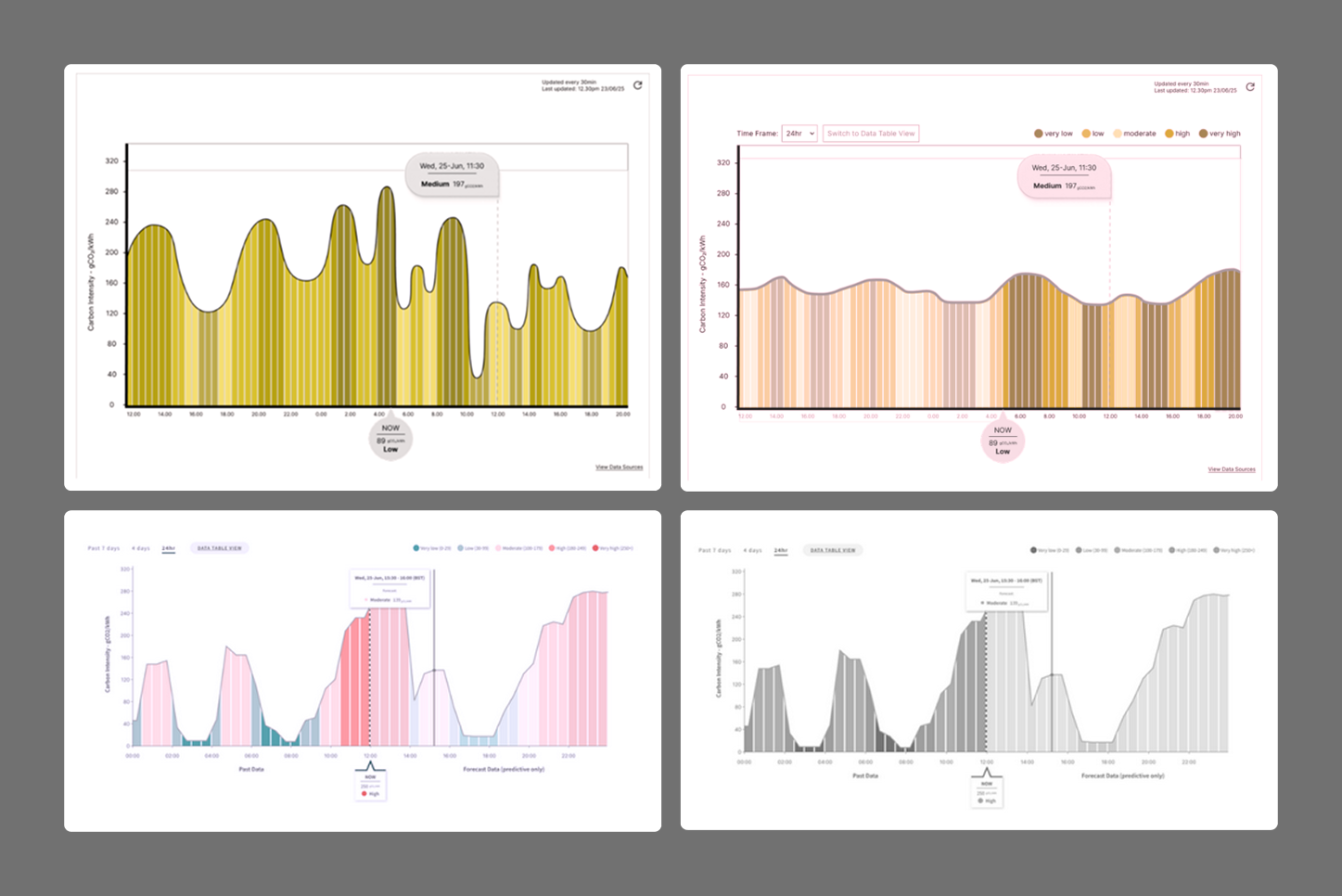
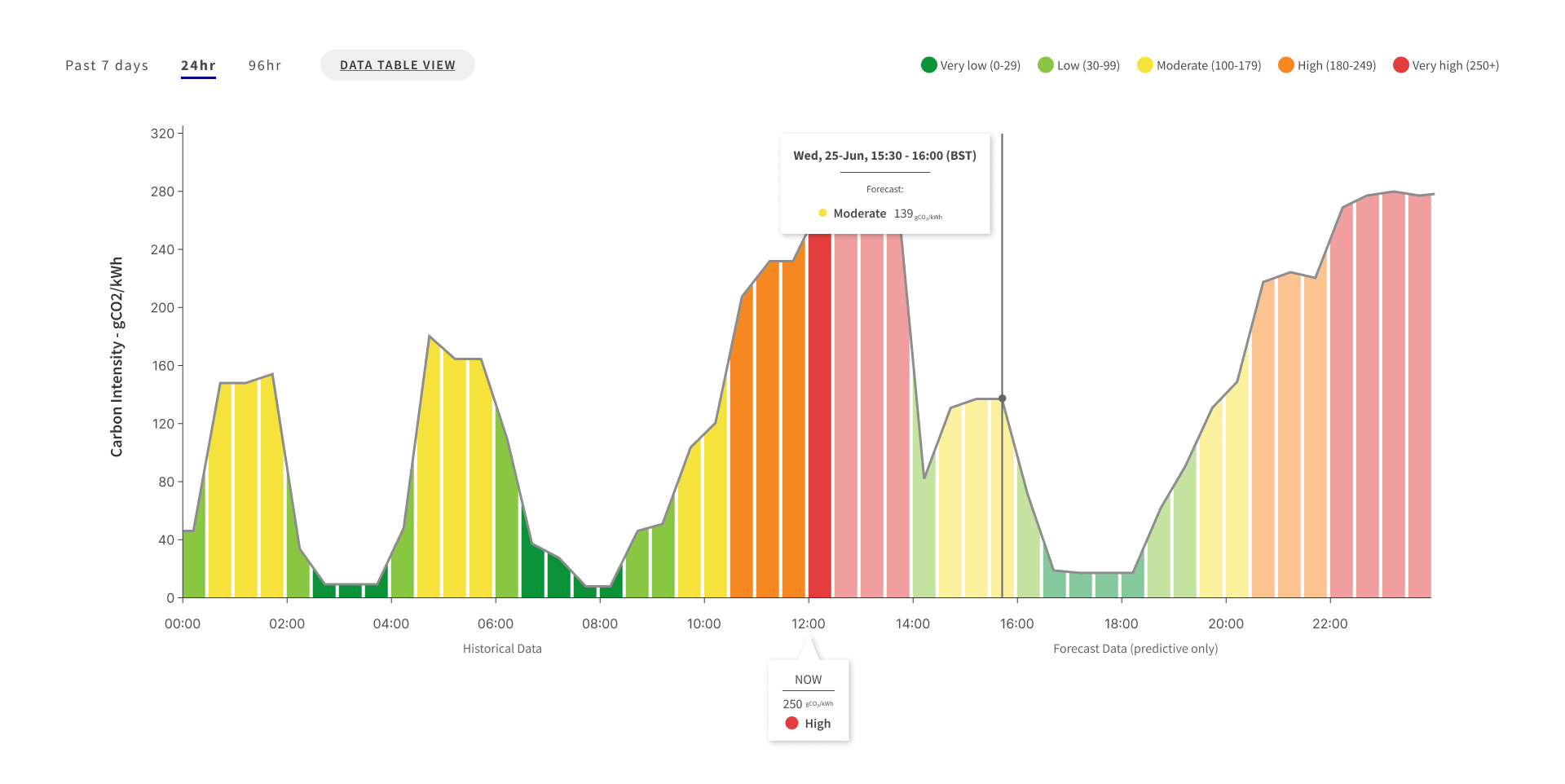
With a strong personal interest in inclusive design, I advocated for accessibility checks.
I tested the designs with a colour-blindness simulator, highlighted areas where visual cues needed strengthening and introduced a data table that screen readers would interpret.
This also prompted stakeholder interest in reviewing accessibility across the wider product.
Usability Testing
Two further rounds of usability testing with 6 and 4 users showed that the concept was engaging, but users struggled with cognitive load, missing context and technical language, which affected trust and confidence.
01. Cognitive Load is Too High
Users struggled to understand the appliance cards and the unexpected navigation.
"I am having to think hard about this and work it all out for myself"
- Participant 3
What we changed:
Added contextual guidance
Simplified the information hierarchy
Added “See our workings” to explain the data
Internal A/B testing confirmed that our changes improved clarity.
BEFORE
AFTER
02. Not enough context
Users didn't know whether they were looking at personal or general information.
"I am a little confused - am I looking at personal smart meter information or some general examples?"
- Participant 5
What we changed:
We added clearer guidance and layered context using expandable sections and hover states.
BEFORE
AFTER
03. Language too technical
Despite our efforts to simplify the language and avoid industry jargon, it was too technical for the users, leaving them confused.
"Carbon intensity forecast... what does that mean?"
- Participant 1
We simplified the wording further into clear, everyday language so it felt more accessible and easier to understand.
BEFORE
AFTER
Emissions are high
Electricity is less clean*
Carbon Intensity forecast
When electricity is cleanest
Energy Grid
Electricity delivered to your home
* To avoid motivating users through guilt, we adjusted the tone, replacing judgmental language like “dirty” energy with more neutral “less clean”.
Outcomes
This was a proof of concept, so we couldn't measure post-launch behavioural impact.
✓
Demonstrated feasibility
Showed how Elexon's industry data could be repackaged for a consumer audience while maintaining accuracy and neutrality.
✓
Improved understanding in testing
Users with little prior knowledge could interpret emissions, regional trends and cleaner periods at a glance.
✓
Created a path to future measurement
Showed how Elexon's industry data could be repackaged for a consumer audience while maintaining accuracy and neutrality.
Measuring Success
As this was a proof of concept rather than a launched product, I proposed three areas for future measurement.
User Understanding & Confidence
Use in-product surveys to measure how well users understand terms like “clean vs less clean,” what CO₂ means, and how confident they feel about changing their energy behaviour.

Behavior Change
Use follow-up interviews and short diary studies to track behaviour change, such as whether users wait for green windows or adjust their routines, to understand how the product fits into everyday life.

Engagement & Retention
Evaluate engagement and retention by tracking time spent on the page, use of expandable explanations and tooltips, and repeat visits over time.

What I Learned
Simplification isn't the same as removing information
Our early designs reduced complexity by stripping information away. Testing showed that users sometimes needed more context to understand what they were seeing.
The final solution used progressive disclosure instead - giving users a clear starting point, then let them access deeper explanation when they need it.
This helped us balance the competing needs:
Clarity and simplicity for the user vs accuracy and neutrality for Elexon
Final Designs
The final concept used progressive disclosure to give users a clear starting point while allowing them to explore deeper information when needed.
01. Take action now or wait
If someone wants to charge their EV, they can quickly see whether their region is currently high-emission and decide whether to wait for a cleaner time. This allows for immediate decision-making without overwhelm.
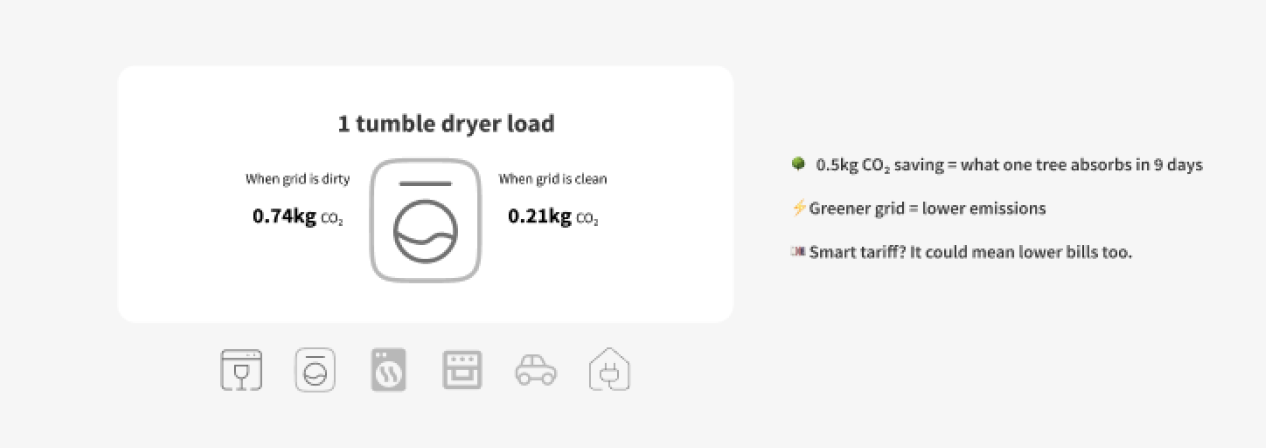
02. Understand the impact of the changes you make
Information about appliance-related emissions can empower people to adjust when they use their devices. Making the impact of CO2 emissions easy to understand is key in people relating to it and wanting to take action.
03. Your energy setup can save money
Using cleaner energy can also lead to cost savings, showing how to do this can help motivate habit change. To maintain Elexon’s neutrality and trust, we focused on providing clear information users lacked, rather than directing them toward specific products or providers.
04. The data behind the insights
To support different learning styles, the dashboard includes simplified graphs explaining UK CO₂ emissions and the energy mix, using plain language and clear colour coding. These visuals allow a deeper dive while showcasing Elexon’s data credibility.
Hey!
If you’re working through a problem or shaping something new, I’d love to talk.