Designing for Carers: A Community-Centred Service Design
Service design project grounded in participatory research, focused on creating accessible experiences for carers and people living with degenerative illness.
COLLABORATORS: Health Research Specialist, Consulting Psychologist, Graphic Designer, Producer
TIME: 12 months
MY ROLE: Service Designer, User Researcher, Facilitator
Having seen the pressure and impact on my mum, as a full-time carer for my dad with Parkinson’s, I think it is an area that needs a lot more support and investment in.
- “Dance for Parkinson’s” group facilitator, Oxford

The Back Story
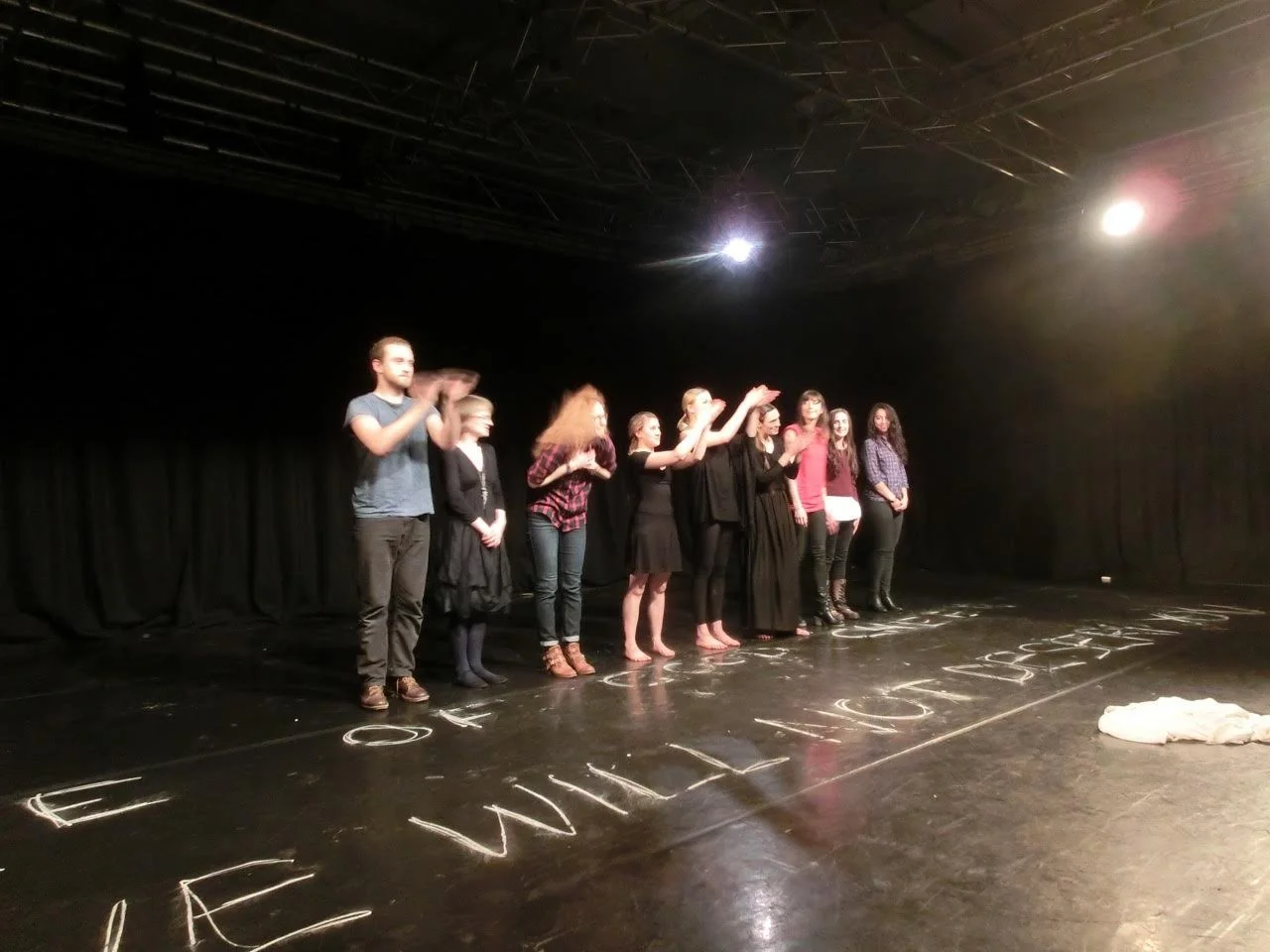
This project began as a stage-based dance work, but direct engagement with carers and people living with Parkinson's revealed a more pressing need. The focus shifted from performance to designing a community-centred service that supports wellbeing and connection through accessible workshops and self-care tools.
This shift was the result of listening carefully to research participants and following the evidence.
Problem Space
Degenerative conditions such as Parkinson's and dementia affect not only individuals but entire family systems. Early research showed a consistent pattern: as care needs increase, relationships are fundamentally restructured.
Partners become carers instead
Carers deprioritise their own needs
Opportunities for shared, equal experiences diminish
This dynamic creates a compounding problem: carers lose access to their own identity and emotional needs at the same time that their responsibilities increase with little structural support to address either.
Design Challenge

How might we design experiences that support carers’ wellbeing while also enabling moments of connection beyond the roles of “carer” and “cared for”, without adding to their already overwhelming cognitive and emotional load?
Impact
The programme reached 73 research participants, 30 workshop attendees and distributed 35 self-care packs. But in this context, scale was never the primary measure of success.
Content translated successfully for carers and mixed groups. Self-care packs were distributed and used independently of the workshops. There was demand across multiple groups and interest from an NHS Trust.
And the experience held its value entirely outside the performance context, confirming that it was a replicable service model.
I wanted to avoid assumptions and ground the work in real, lived experience*. So I designed a multi-layered research approach, selecting methods that could reach participants with different capacities and comfort levels:
Research and Discovery
Finding an approach that suits the sensitive topic
33
in-depth interviews & consultations with carers
To understand nuanced, personal experiences and emotional insight
50 responses via questionnaires
To reach a broader group with lower participation burden
2 participatory session observed
To understand real behaviour in context, beyond self-reported experience
* I worked closely with a wellbeing research specialist to adapt the questions and with a psychologist to ensure the questions and interview settings were appropriate for discussing sensitive and emotionally complex topics.
Key insights that lead to a shift in focus
This means: Flexibility of our offering is critical, as schedules are filled with care responsibilities and as energy levels vary daily
Caregiving gradually reshapes identity and relationships within families and couples

Carers often lack time, energy and permission for self-care
Emotional connection becomes secondary to functional care
Defining the opportunity
With the new focus of creating direct engagement opportunities, two core areas of focus emerged for this outreach programme:
01.
Support carers as individuals by providing low-barrier, adaptable self-care options
02.
Reframe shared experiences by creating moments where participants can engage as equals
Accommodating for realities of care:
Rethinking the content and the delivery model
A major constraint emerged: carers’ lives were already stretched to capacity and their schedules tightly organised around the needs of the people they supported.
Attending a new workshop can feel like an additional responsibility rather than a source of support.
We redesigned the offer to fit around the realities of their lives instead.
1.
Partnering with existing community groups
We partnered with community groups that people already attended regularly, reducing barriers to participation and embedding the workshops within existing support networks.
2.
Running parallel sessions
Carers had limited free time and were hesitant to spend it on something unfamiliar. To reduce barriers, we ran parallel sessions alongside activities already attended by their loved ones.
3.
Designing integrated workshops
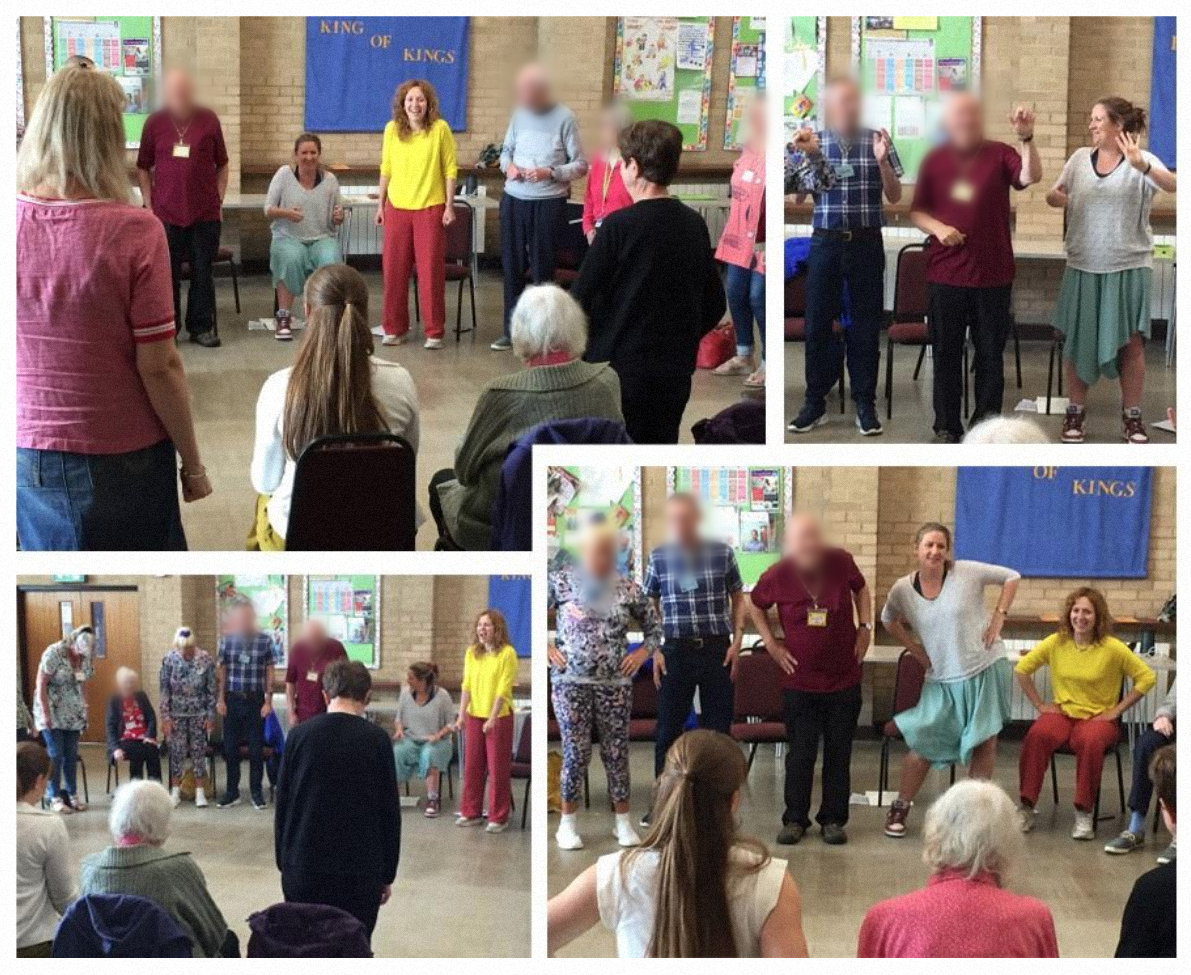
We designed adaptable workshops that carers and their loved ones could experience together, creating space for playful, restorative interaction that allowed participants to engage as equals rather than through the hierarchy of care.
I designed movement-based workshops that function as flexible experiences, with these key considerations in mind:
Design & Development
Low physical and cognitive load
Emotional safety and openness
Inclusive and accessible to different abilities
Adaptability to different settings
Structured opportunities for conversation and reflection
I developed the movement content together with a health movement specialist to ensure inclusivity. I also consulted a psychologist on how to facilitate conversations within these sensitive spaces.
Workshops (Service design)
“Quote from group facilitator here: - Recipient of a self care pack
To offer a more lasting experience, I produced a take-home “Breakfast Play Box” designed to extend the experience beyond workshops.
Activities in the pack can be chosen based on the mood, energy level or time available and are designed for individual use or as shared activities.
The goal:
Encourage sustainable self-care habits
Enable connection outside caregiving roles
Reduce isolation
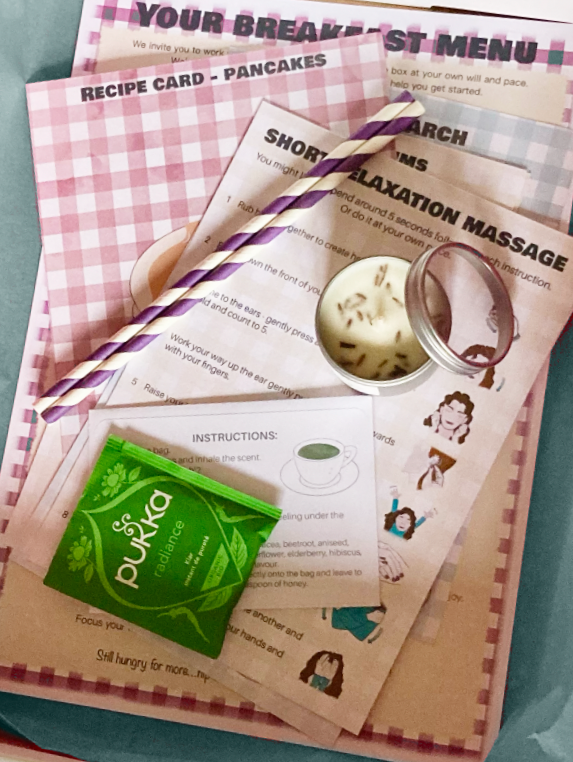
“I am a great follower of mindfulness and was absolutely delighted to find all those wonderful, encouraging ideas in your breakfast box! Thank you so much.”
- Recipient of a self care pack
Self-care packs (Product design)
Outcomes
Impact and Measures of Success
The project evolved beyond its original intention as a performance piece, demonstrating clear value as a community-centred support experience. Through workshops, self-care tools and facilitator training, we were able to test the demand and adaptability of the offer across different contexts.
We reached:
70+ research participants
30+ workshop participants
35 self-care packs distributed
However…
Projects like this one, that centre on wellbeing, outreach, and vulnerable communities, require a different understanding of success.
Rather than focusing purely on scale or participation numbers, the value often lies in trust, emotional safety, adaptability, and the ability to create meaningful moments of connection within people’s everyday realities.
Success in this context was less about volume and more about creating accessible, meaningful experiences that participants found valuable enough to return to, adapt, and share within their communities.
“We’ve been really pleased with the quality of the content, backed by solid research. We cannot wait to put these ideas into production”
- Elexon Stakeholder
If you’re working through a problem or shaping something new, I’d love to talk.